Looking to dive into the legendary filmography of Akira Kurosawa but don't know where to start? You’re not alone. With dozens of masterpieces spanning decades, figuring out the perfect watch order can feel overwhelming. Plus, finding these cinematic treasures in crisp, high-definition online can be a total guessing game. Which platform offers the best picture? Are those rare early features even available in your region? We’ve done the heavy lifting for you. From epic samurai showdowns to gritty noir dramas, we’ve put together the ultimate breakdown of the master director's work. Check out our definitive countdown, complete with the absolute best streaming options available globally, so you can spend less time scrolling and more time enjoying pure cinema history.
🎬Complete Akira Kurosawa Filmography Ranked by IMDb Rating: at a Glance
The table below catalogs Akira Kurosawa's entire solo directorial catalog. For global streaming options, The Criterion Channel and Max (HBO) remain the gold standards for high-bitrate, beautifully restored editions in North America, while BFI Player and MUBI cover the UK and international territories. For widely available digital rentals worldwide, Apple TV and Amazon Prime Video offer premium 1080p/4K master copies.
| Rank | Movie | Year | Main Cast | Genre | IMDb | Highlights | Where to Watch |
|---|---|---|---|---|---|---|---|
| 1 | Seven Samurai (七人の侍) | 1954 | Toshiro Mifune, Takashi Shimura | Samurai, Action | 8.6 | One of the greatest films ever made | Max, Criterion Channel , Apple TV , Amazon Prime Video (Rent), Google TV |
| 2 | High and Low (天国と地獄) | 1963 | Toshiro Mifune, Tatsuya Nakadai | Crime, Thriller | 8.4 | Brilliant police procedural | Criterion Channel , Apple TV , Amazon Prime Video |
| 3 | Ikiru (生きる) | 1952 | Takashi Shimura | Drama | 8.3 | Emotional human masterpiece | Criterion Channel , Max, Apple TV |
| 4 | Ran (乱) | 1985 | Tatsuya Nakadai | Epic, War | 8.2 | Shakespeare-inspired masterpiece | Apple TV , Amazon Prime Video, Google TV |
| 5 | Rashomon (羅生門) | 1950 | Toshiro Mifune, Machiko Kyo | Mystery | 8.2 | Revolutionary nonlinear storytelling | Criterion Channel ,Apple TV |
| 6 | Yojimbo (用心棒) | 1961 | Toshiro Mifune | Samurai | 8.2 | Inspired countless Westerns | Criterion Channel ,Apple TV |
| 7 | Throne of Blood (蜘蛛巣城) | 1957 | Toshiro Mifune | Samurai, Drama | 8.1 | Macbeth reimagined in feudal Japan | Criterion Channel , Apple TV |
| 8 | Sanjuro (椿三十郎) | 1962 | Toshiro Mifune | Samurai, Comedy | 8.0 | Smart sequel to Yojimbo | Criterion Channel ,Apple TV |
| 9 | Kagemusha (影武者) | 1980 | Tatsuya Nakadai | Historical | 7.9 | Stunning battle sequences | Hulu (US), Apple TV |
| 10 | Red Beard (赤ひげ) | 1965 | Toshiro Mifune | Drama | 8.0 | Compassionate medical drama | Criterion Channel |
| 11 | The Hidden Fortress (隠し砦の三悪人) | 1958 | Toshiro Mifune | Adventure | 8.0 | Major inspiration for Star Wars | Criterion Channel |
| 12 | Dersu Uzala (デルス・ウザーラ) | 1975 | Maksim Munzuk | Adventure | 8.2 | Oscar-winning Soviet-Japanese production | Apple TV |
| 13 | Stray Dog (野良犬) | 1949 | Toshiro Mifune | Crime | 7.9 | Noir detective classic | Criterion Channel |
| 14 | Drunken Angel (醉いどれ天使) | 1948 | Toshiro Mifune | Crime | 7.7 | First Mifune collaboration | Criterion Channel |
| 15 | The Bad Sleep Well (悪い奴ほどよく眠る) | 1960 | Toshiro Mifune | Crime | 8.0 | Corporate corruption thriller | Criterion Channel |
| 16 | Dreams (夢) | 1990 | Akira Terao | Fantasy | 7.7 | Eight visually poetic dreams | Max, Apple TV |
| 17 | No Regrets for Our Youth (わが青春に悔なし) | 1946 | Setsuko Hara | Drama | 7.5 | Political drama | Criterion Channel |
| 18 | One Wonderful Sunday (素晴らしき日曜日) | 1947 | Isao Numasaki | Romance | 7.2 | Post-war optimism | Criterion Channel |
| 19 | The Quiet Duel (静かなる決闘) | 1949 | Toshiro Mifune | Drama | 7.3 | Medical ethics | Criterion Channel |
| 20 | Scandal (醜聞) | 1950 | Toshiro Mifune | Drama | 7.2 | Media criticism | Criterion Channel |
| 21 | The Idiot (Hakuchi) | 1951 | Setsuko Hara | Drama | 7.1 | Dostoevsky adaptation | Criterion Channel |
| 22 | I Live in Fear (生きものの記録) | 1955 | Toshiro Mifune | Drama | 7.3 | Nuclear anxiety | Criterion Channel |
| 23 | The Lower Depths (どん底) | 1957 | Toshiro Mifune | Drama | 7.3 | Gorky adaptation | Criterion Channel |
| 24 | The Men Who Tread on the Tiger's Tail | 1945 | Susumu Fujita | Historical | 7.1 | Early period drama | Criterion Channel |
| 25 | Dodes'ka-den (どですかでん) | 1970 | Yoshitaka Zushi | Drama | 7.3 | Kurosawa's first color film | Criterion Channel |
| 26 | Rhapsody in August (八月の狂詩曲) | 1991 | Sachiko Murase | Drama | 7.2 | Anti-war family story | Apple TV |
| 27 | Madadayo (まあだだよ) | 1993 | Tatsuo Matsumura | Drama | 7.3 | Kurosawa's final film | Apple TV |
| 28 | Sanshiro Sugata (姿三四郎) | 1943 | Susumu Fujita | Martial Arts | 6.9 | Directorial debut | Criterion Channel |
| 29 | Sanshiro Sugata Part II (續姿三四郎) | 1945 | Susumu Fujita | Martial Arts | 6.2 | Wartime sequel | Criterion Channel |
| 30 | The Most Beautiful (一番美しく) | 1944 | Takako Irie | Drama | 6.2 | Wartime factory drama | Criterion Channel |
✨Essential Must-Watch Films: Deep Dive Recommendations
If you're new to Akira Kurosawa, these films offer the perfect introduction to his extraordinary filmmaking. They showcase his range—from epic samurai adventures to deeply emotional human dramas and sophisticated crime thrillers.
1. Seven Samurai (1954) - The Epic That Defined Cinema
"The greatest film of all time and one of the most influential films of all time."
| Director | Akira Kurosawa |
| Cast | Toshirō Mifune, Takashi Shimura, Keiko Tsushima, Yoshio Inaba, Seiji Miyaguchi |
| Genre | Action, Drama, Adventure |
| Runtime | 3h 27m |
| IMDb | 8.6 (403K votes) |
| Where to Watch | BFI Player (subscription), Amazon Prime (rent/buy), Apple TV (rent/buy) |
📕Why Watch: This isn't just a classic film; it's the structural template for everything from The Magnificent Seven and The Avengers to A Bug’s Life. Kurosawa pioneered techniques here that we take for granted today: assembling a team with unique skill sets, using slow-motion during high-stakes violence, and tracking weather changes to amplify battlefield dread. The climactic battle in the torrential mud remains one of the most viscerally spectacular sequences ever filmed.
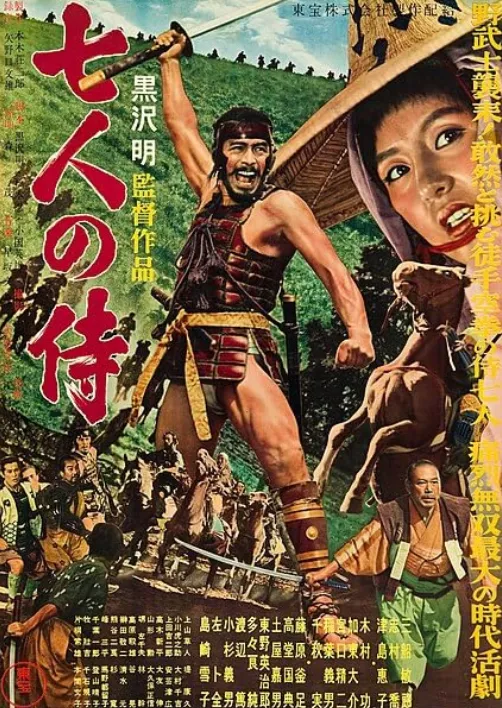
📚Plot Summary: In 16th-century Japan, a village of poor farmers, terrorized by bandits, hires a veteran samurai (Takashi Shimura) to defend them. He recruits six other masterless samurai, including the wild, unpredictable Kikuchiyo (Toshirō Mifune). Together, they train the villagers for an inevitable battle—forging unlikely bonds across class divides.
📍Viewing Tips:
-
Pace yourself: At 207 minutes, it's a marathon. Treat it like a mini-series—watch in two sittings if needed.
-
Look for Mifune: His performance as Kikuchiyo is one of cinema's great comic-tragic turns.
-
Pay attention to the rain: The final battle sequence, shot in real rain, is legendary for its technical ambition.
2. Ikiru (1952) - The Most Human Film Ever Made
"An intensely lyrical and moving film... one of Kurosawa's own favourites."
| Director | Akira Kurosawa |
| Cast | Takashi Shimura, Nobuo Kaneko, Shin'ichi Himori, Haruo Tanaka |
| Genre | Drama |
| Runtime | 2h 23m |
| IMDb | 8.3 (103K votes) |
| Where to Watch | Stream on Criterion Channel / Rent on Apple TV |
📕Why Watch: While Kurosawa is famous for swords and kinetic violence, Ikiru (meaning "To Live") proves he was a master of human emotion. Takashi Shimura delivers an all-time great physical performance as the hunched, hollowed-out bureaucrat. The image of him quietly swinging on a playground swing set in the falling snow while humming a melancholic childhood song is one of the most unforgettable, tear-jerking shots in film history.
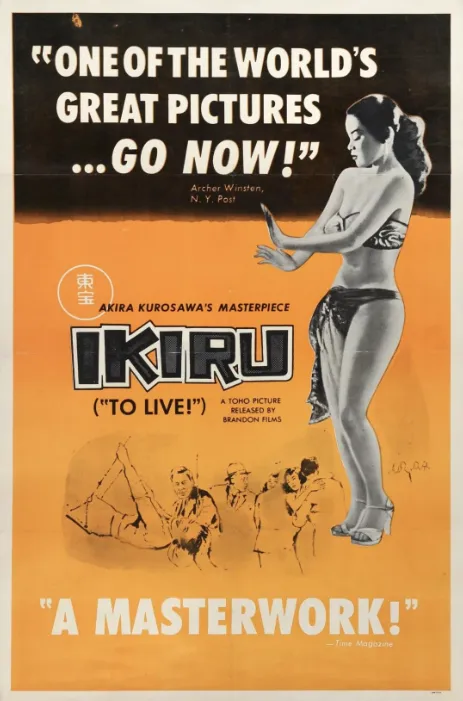
📚Plot Summary: Kanji Watanabe is a weary, widowed bureaucrat who has spent thirty years doing absolutely nothing at his soul-crushing municipal desk job. When he receives a terminal stomach cancer diagnosis and realizes he has less than a year to live, he wakes up from his stupor. After failed attempts to find meaning in hedonistic nightlife and superficial youth, he resolves to cut through corrupt red tape to build a modest playground for a poor neighborhood before he dies.
📍Viewing Tips:
-
Bring tissues: This is one of cinema's great emotional experiences.
-
Watch the second half closely: The film's structure shifts dramatically—and brilliantly—after Watanabe's death.
-
Reflect on your own life: Kurosawa intended this film as a mirror. Let it be one.
3. Ran (1985) - Kurosawa's Colorful Masterpiece
"The greatest war movie ever made." — Vulture
| Director | Akira Kurosawa |
| Cast | Tatsuya Nakadai, Akira Terao, Jinpachi Nezu, Mieko Harada |
| Genre | Action, Drama, War |
| Runtime | 2h 40m |
| IMDb | 8.2 (153K votes) |
| Where to Watch | Rent on Apple TV / Rent on Amazon Prime |
📕Why Watch: Filmed when Kurosawa was 75 years old and dealing with failing eyesight, Ran (meaning "Chaos" or "Rebellion") is his sweeping grand finale. Rather than relying on CGI, Kurosawa utilized thousands of actual horsemen and extras clad in hand-dyed, vibrant armor. The centerpiece siege on the Third Castle—where the entire audio track goes completely silent, replaced only by Toru Takemitsu's tragic orchestrations—is a towering achievement of operatic, apocalyptic imagery.
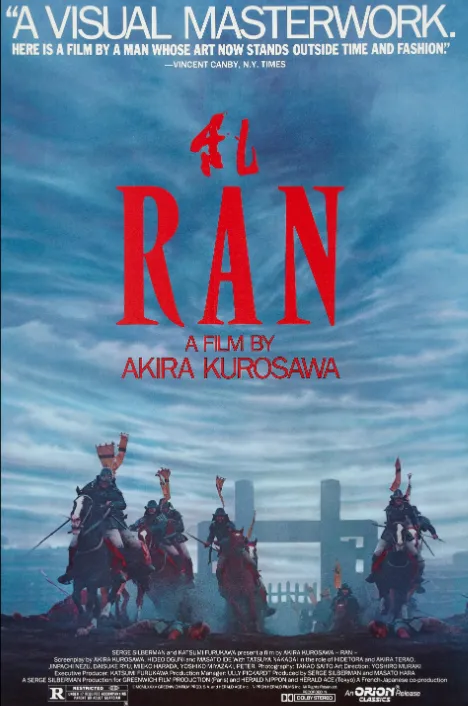
📚Plot Summary: Loosely adapting Shakespeare's King Lear into Sengoku-period Japan, the aging warlord Lord Hidetora Ichimonji decides to abdicate power and divide his vast kingdom among his three sons. Expecting to spend his remaining days as an honored guest, Hidetora is instead violently betrayed by his power-hungry heirs. Stripped of his army, his home, and his sanity, the former tyrant wanders a hellish landscape as his empire collapses into bloody civil war.
📍Viewing Tips:
-
See it in the highest quality possible: The color cinematography is breathtaking—4K restoration recommended.
-
Pay attention to the visuals: Kurosawa storyboarded every shot as a full-scale painting.
-
Know your Shakespeare: Familiarity with King Lear enriches the experience, but it stands powerfully on its own.
4. Rashomon (1950) - The Film That Changed World Cinema
| Director | Akira Kurosawa |
| Cast | Toshirō Mifune, Machiko Kyō, Masayuki Mori, Takashi Shimura |
| Genre | Crime, Drama, Mystery |
| Runtime | 1h 28m |
| IMDb | 8.1 (197K votes) |
| Where to Watch | Stream on Criterion Channel / Stream on Max |
📕Why Watch: Rashomon single-handedly put Japanese cinema on the global map after winning the Golden Lion at the Venice Film Festival. It gave birth to the psychological term "The Rashomon Effect," referring to how different individuals process and distort the exact same event to favor their own egos. It is short, fast-paced, conceptually brilliant, and features Kazuo Miyagawa’s legendary cinematography—which broke industry rules by pointing the camera lens directly through the trees into the sun.
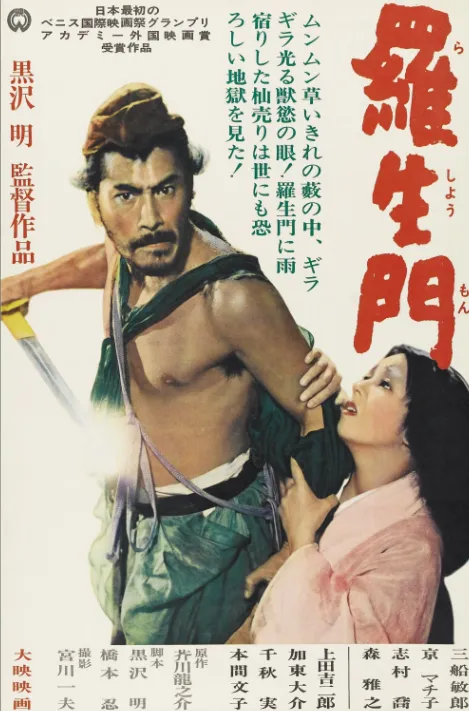
📚Plot Summary: Sheltering from a torrential downpour beneath the ruined Rashomon city gate, a priest, a woodcutter, and a commoner recount a shocking crime: a samurai has been killed in the woods and his wife assaulted. However, as the trial unfolds, the incident is told through four wildly contradictory perspectives: the notorious bandit, the traumatized wife, the ghost of the murdered samurai speaking through a medium, and a hidden witness.
📍Viewing Tips:
-
Don't search for "the truth": The film is about the nature of truth itself—not about solving a mystery.
-
Watch the performances: Mifune's bandit is ferocious, primal, and unforgettable.
-
Notice the rain: The film's framing device takes place at the ruined Rashomon gate in the rain—a metaphor for moral decay.
5. High and Low (1963) - Kurosawa's Taut Modern Thriller
| Director | Akira Kurosawa |
| Cast | Toshirō Mifune, Tatsuya Nakadai, Kyōko Kagawa, Tatsuya Mihashi |
| Genre | Crime, Drama, Thriller |
| Runtime | 2h 23m |
| IMDb | 8.4 (72K votes) |
| Where to Watch |
📕Why Watch: The title says it all. The first half is a claustrophobic chamber piece set high up in Gondo’s sleek, luxurious hill-top apartment, emphasizing immaculate character blocking. The second half drops down into the low depths of a sweltering, gritty post-war Tokyo underworld as a procedural police hunt takes over. It’s a flawless examination of class warfare and moral duty disguised as a razor-sharp thriller.
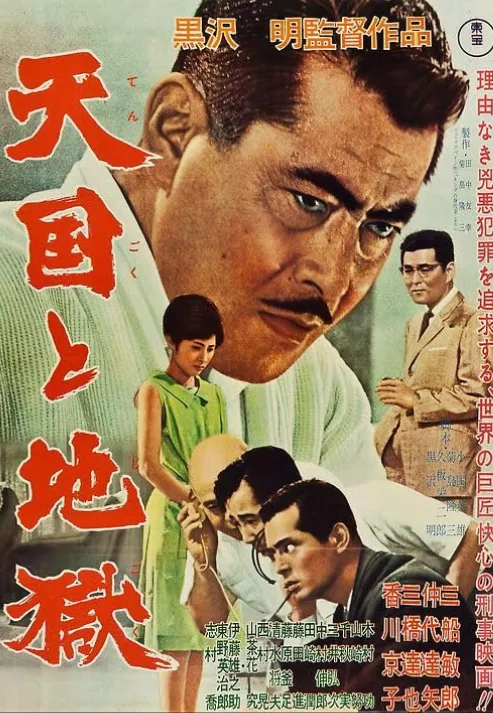
📚Plot Summary: Kingo Gondo (Toshirō Mifune), an executive of a Yokohama shoe company, is planning a hostile takeover when he receives a ransom demand: his son has been kidnapped. But a mistake has been made—the kidnapper has taken his chauffeur's son instead. Gondo faces an impossible moral choice: pay the ransom and ruin himself financially, or let the chauffeur's son die.
📍Viewing Tips:
-
Watch the first half in one room: The tension is amplified by the confined setting.
-
Appreciate the procedural: The second half is a masterclass in detective work.
-
Compare to modern thrillers: You'll see its DNA in countless films that followed.
6. Yojimbo (1961) - The Coolest Samurai Film Ever Made
| Director | Akira Kurosawa |
| Cast | Toshirō Mifune, Tatsuya Nakadai, Eijirō Tōno, Seizaburō Kawazu |
| Genre | Action, Drama |
| Runtime | 1h 50m |
| IMDb | 8.2 (143K votes) |
| Where to Watch | Stream on Criterion Channel / Stream on Max |
📕Why Watch: If you love Clint Eastwood’s Man with No Name character from A Fistful of Dollars, you have Yojimbo to thank. Toshiro Mifune radiates effortless charisma here—scratching his beard, chewing on a toothpick, and shrugging his shoulders with cynical coolness. Backed by an unorthodox, jazzy, percussive score, Yojimbo is Kurosawa at his most purely entertaining, witty, and stylistically subversive.
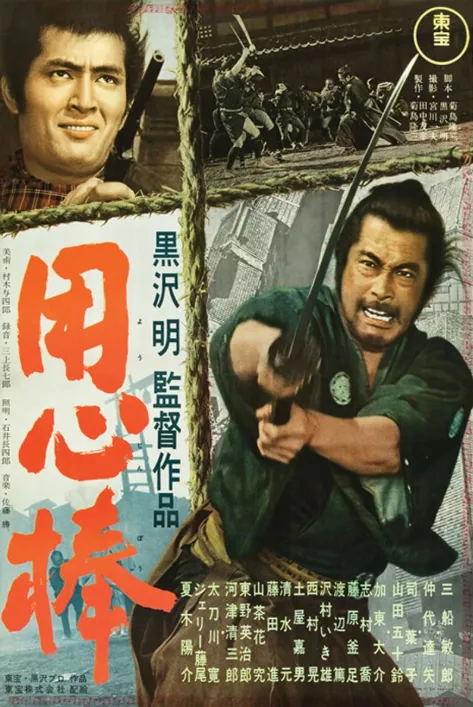
📚Plot Summary: A nameless, scruffy, and incredibly lethal ronin wanders into a bleak town torn apart by a senseless turf war between two corrupt criminal factions. Realizing both sides are equally despicable, the samurai decides to play them against one another. Offering his sword services to the highest bidder, he carefully orchestrates a chaotic web of betrayals that results in the town cleaning itself up.
📍Viewing Tips:
-
Watch Mifune's swagger: His performance is pure cinematic charisma.
-
Spot the influence: Notice how the plot mirrors classic Westerns—and how it influenced them in return.
-
Follow with Sanjuro: The loose sequel is lighter in tone but equally brilliant.
7. Throne of Blood (1957) - Macbeth in Feudal Japan
| Director | Akira Kurosawa |
| Cast | Toshirō Mifune, Minoru Chiaki, Isuzu Yamada, Takashi Shimura |
| Genre | Drama, History |
| Runtime | 1h 50m |
| IMDb | 8.0 (60K votes) |
| Where to Watch |
📕Why Watch: Kurosawa's adaptation of Macbeth is cold, brutal, and hypnotic—one of the best Shakespeare adaptations ever put on screen. Set in feudal Japan and infused with the stylized movement of Noh theatre, it transforms the Scottish play into something uniquely Japanese and universally powerful.
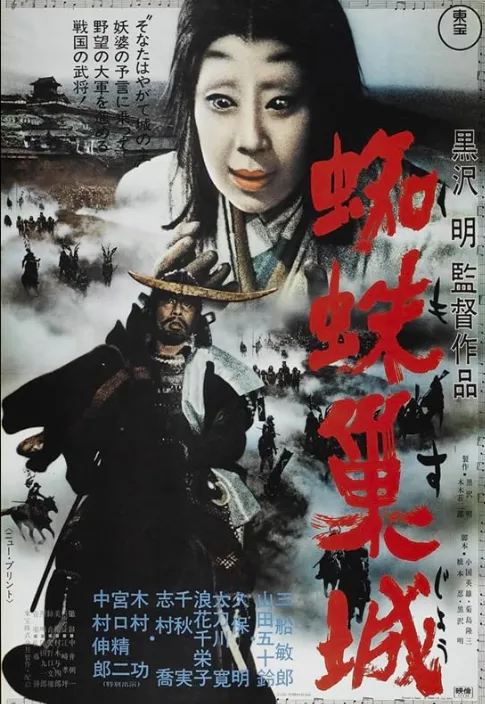
📚Plot Summary: A war-hardened general (Toshirō Mifune), egged on by his ambitious wife (Isuzu Yamada), works to fulfill a prophecy that he will become lord of Spider's Web Castle. But once he seizes power, paranoia and guilt consume him—leading to a spectacular, unforgettable death.
📍Viewing Tips:
-
Know Noh theatre: The film's stylized performances and deliberate pacing are rooted in this traditional Japanese art form.
-
Watch Mifune's final scene: It's one of the most astonishing death sequences in cinema history—a barrage of arrows.
-
Compare to Macbeth: Notice how Kurosawa transforms the text while preserving its tragic essence.
8. The Hidden Fortress (1958) - The Film That Inspired Star Wars
| Director | Akira Kurosawa |
| Cast | Toshirō Mifune, Misa Uehara, Minoru Chiaki, Kamatari Fujiwara |
| Genre | Adventure, Drama |
| Runtime | 2h 18m |
| IMDb | 8.0 (44K votes) |
| Where to Watch | Rent on Amazon Prime / Stream on Criterion Channel |
📕Why Watch: George Lucas has openly acknowledged that The Hidden Fortress was the primary inspiration for Star Wars—from the bickering comic-relief characters (C-3PO and R2-D2) to the princess in disguise, the hidden fortress itself, and the samurai-like Jedi.
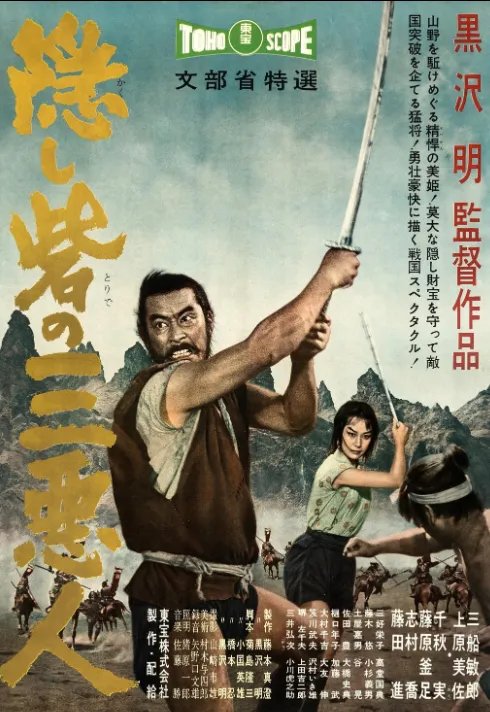
📚Plot Summary: A general (Toshirō Mifune) is charged with guarding his clan's princess as they cross hostile territory to reach safety. They are accompanied by two bumbling, greedy peasants whose squabbling provides comic relief. It's a thrilling mix of fairy tale, adventure, and samurai action.
📍Viewing Tips:
-
Play "Spot the Star Wars": The influences are everywhere—enjoy the Easter eggs.
-
Appreciate the scope: This is Kurosawa at his most purely entertaining.
-
Watch the peasants: Their comic greed provides the film's heart and humor.
🌍Where to Stream Akira Kurosawa Films: Ultimate Streaming Directory
Although Akira Kurosawa's films were released decades ago, they're easier to watch today than ever before thanks to restored editions and digital streaming. The best platform depends on whether you prefer subscription streaming, free library access, or digital rentals and purchases.
Tip: Because distribution rights vary by country, availability may change over time. If a title isn't available in your region, check another platform or a digital rental service.
1️⃣Subscription Streaming (Monthly/Annual Fee)
| Platform | Cost | Content | Languages & Quality | Best For |
|---|---|---|---|---|
| The Criterion Channel | $10.99/month or $99.99/year | Largest Kurosawa library – includes Seven Samurai, Rashomon, Ikiru, Yojimbo, High and Low, Throne of Blood, The Hidden Fortress, Red Beard, plus special features, commentaries, and curated collections | HD (1080p); original Japanese audio with English subtitles; ad-free | US & Canada only – Cinephiles who want the deepest Kurosawa collection with bonus content |
| HBO Max | $9.99+/month | Select Kurosawa titles including Seven Samurai and Rashomon via ongoing partnership with Criterion Collection | Up to 4K UHD/HDR10/Dolby Vision on select titles; multi-language subtitles & audio | US only – General streamers who already have Max and want easy access to key classics |
| BFI Player (UK) | £6.99/month or £65/year | Curated selection including Seven Samurai, Ran, Ikiru; focus on world cinema, classics, and archive films | HD streaming; original language with English subtitles | UK only – British viewers who appreciate curated, independent cinema |
| BFI Player Classics (US) | $5.99/month or $59/year | Classic British and international films, including select Kurosawa titles | HD streaming | US only – American viewers who want BFI's curation |
| STUDIOCANAL PRESENTS (via Apple TV/Prime) | Subscription fee (varies) | Includes Kurosawa's Ran and documentary A.K.: Akira Kurosawa; features stunning 4K restorations | 4K restorations available | UK/Europe – Viewers who want pristine 4K presentations |
| MUBI | $14.99/month (varies by region) | Curated rotating selection – Kurosawa titles appear periodically | HD; original language with subtitles | Global (select regions) – Art-house fans who enjoy curated, rotating libraries |
2️⃣Free & Library-Based Viewing Options (AVOD / Local)
Best for: Students or budget-conscious viewers looking for completely legal, free access.
| Platform | Cost | Content | Languages & Quality | Best For |
|---|---|---|---|---|
| Tubi TV | Free (ad-supported) | Seven Samurai, Rashomon, and other classic films; large library of 40,000+ titles | Varies by title (often HD); original Japanese with subtitles available | US, Canada, UK, Australia – Budget-conscious viewers who don't mind ads |
| Plex | Free (ad-supported) | Seven Samurai, Rashomon, and other classic films; 50,000+ titles and 300+ live TV channels | Quality varies by title; subtitles depend on content provider | Global (most countries) – Viewers who want free access with ads |
| Shout! Factory TV | Free (ad-supported) | Seven Samurai, Rashomon | Varies by title | US – Classic film fans |
| Pluto TV | Free (ad-supported) | Seven Samurai, Rashomon | Varies by title | US – Cord-cutters who enjoy free ad-supported TV |
| Free Movies Plus | Free (ad-supported) | Seven Samurai, Rashomon | Standard definition typically | US – Viewers who want zero-cost access |
| Fawesome | Free (ad-supported) | Rashomon | Varies | US – Budget viewers |
| Kanopy | Free with participating library card | Seven Samurai, Rashomon, and other classic and independent films | HD streaming; subtitles in multiple languages; full transcripts available | US, Canada, UK, Australia, New Zealand – Students, library card holders, and anyone with access to a participating library |
| Hoopla | Free with participating library card | Select classic films (availability varies) | Varies by title | US/Canada – Library card holders who prefer Hoopla's interface |
3️⃣Rent or Buy (Transactional VOD)
| Platform | Cost | Content | Languages & Quality | Best For |
|---|---|---|---|---|
| Amazon Prime Video | Rent (~$3.99–$4.99) Buy (~$9.99–$14.99) | Extensive Kurosawa library – Seven Samurai, Ran, The Hidden Fortress, High and Low, Yojimbo, and more | Up to 4K UHD; multiple subtitle languages; 48-hour rental window | Global – Viewers who want permanent ownership or one-off rentals without subscription commitment |
| Apple TV Store | Rent (~$3.99–$4.99) Buy (~$9.99–$14.99) | Seven Samurai, Rashomon, Throne of Blood, Ran, and more | Automatically plays in highest quality available – up to 4K; multiple subtitle & audio languages; 30-day rental window, 48 hours once started | Global – Apple ecosystem users who want high-quality rentals or purchases |
| Fandango At Home (formerly Vudu) | Rent or Buy | Seven Samurai, Rashomon | HD/4K available | US – Viewers who prefer Fandango's ecosystem |
| Google Play / YouTube | Rent or Buy | Seven Samurai and other select titles | HD/4K available | Global – Android/Google ecosystem users |
| Rakuten TV | Rent or Buy | Ran and other Kurosawa titles | HD available | Europe – European viewers |
📌Quick Tips for Finding Kurosawa in Your Region
-
Use JustWatch.com – Enter your country and search for any Kurosawa title to see real-time availability across all platforms in your region.
-
Check Reelgood.com – Another excellent aggregator that tracks 300+ streaming services with real-time updates.
-
Criterion Channel is the gold standard – If you're in the US or Canada and serious about Kurosawa, this is your best bet for the widest selection with special features.
-
Free options exist – Tubi, Plex, Pluto TV, and Shout! Factory TV all offer select Kurosawa titles at zero cost – just be prepared for ads.
-
Rental is great for one-off viewing – Amazon and Apple TV let you rent individual films for ~$4 with a 48-hour viewing window – perfect if you only want to watch one or two titles.
-
Not all titles are available everywhere – Regional licensing varies significantly. Use a VPN if you're traveling and need to access your home region's library.
📜How to Choose Your First Kurosawa Film: A Beginner’s Guide
So you've heard the name. You know he's a legend. But with 30 films spanning five decades, from black‑and‑white samurai epics to modern crime thrillers and surreal colour dreams, where on earth do you start?
The good news: there's no wrong answer. But if you want your first experience to be memorable—and to avoid feeling overwhelmed by 3‑hour runtimes or dense historical context—this guide will help you pick the perfect entry point based on your personal taste, available time, and mood.
1️⃣Ask Yourself One Simple Question
"What kind of movie do I feel like watching right now?"
Kurosawa was a chameleon. He made:
-
Sword‑clashing action that rivals any Western or martial‑arts film
-
Gripping crime procedurals that keep you on the edge of your seat
-
Heart‑wrenching human dramas that will make you question your own life
-
Shakespeare adaptations with a Japanese twist
-
Philosophical puzzles that mess with your perception of truth
-
Surreal, dreamlike fantasies in stunning colour
So instead of forcing yourself to watch "the greatest" first, pick the genre that excites you most right now.
2️⃣Match Your Taste to the Perfect Title
Kurosawa wasn't only a samurai filmmaker. His filmography covers multiple genres, so choosing one that fits your usual tastes makes the experience much more enjoyable.
| If You Love… | Start With This | Why It Works |
|---|---|---|
| Big‑scale action & epic battles | Seven Samurai (1954) | The ultimate team‑up epic. Long (207 min) but every second earns its place. |
| Cool anti‑heroes & dark comedy | Yojimbo (1961) | Short (110 min), stylish, and the blueprint for every “man with no name” film. |
| Tense crime / hostage thrillers | High and Low (1963) | Modern Tokyo setting – a moral dilemma that grips like Hitchcock. |
| Deep, tear‑jerking life dramas | Ikiru (1952) | No swords – just a dying man’s search for meaning. Devastatingly human. |
| Mind‑bending unreliable narratives | Rashomon (1950) | 88 minutes. Four versions of one crime. Truth becomes a puzzle. |
| Shakespearean tragedy | Throne of Blood (1957 – Macbeth) or Ran (1985 – King Lear) | Throne is darker and tighter; Ran is a colourful visual spectacle. |
| Light adventure & comic relief | The Hidden Fortress (1958) | Fast, fun, and the direct inspiration for Star Wars. |
3️⃣Consider Your Time Budget
Kurosawa's films range from 85 to over 200 minutes. If you're short on time, avoid starting with Seven Samurai or Ran—save those for a weekend.
| Runtime | Best Short(er) Options |
|---|---|
| Under 90 min | Rashomon (88 min), The Men Who Tread on the Tiger's Tail (59 min – but not essential) |
| 90–120 min | Yojimbo (110 min), Sanjuro (96 min), Throne of Blood (110 min), The Hidden Fortress (138 min – still manageable) |
| Over 2h | Ikiru (143 min), High and Low (143 min), Ran (160 min), Seven Samurai (207 min) |
Pro tip: Don't be afraid to pause a longer film and watch it in two sittings. Kurosawa himself structured many films with clear act breaks.
4️⃣The Ultimate Decision Matrix – Pick by Mood
| Your Mood Right Now | Your Clear Winner |
|---|---|
| “I want excitement and cool sword fights” | Yojimbo |
| “I want a once‑in‑a‑lifetime cinematic epic” | Seven Samurai |
| “I want to cry and reflect on life” | Ikiru |
| “I want a clever, edge‑of‑my‑seat thriller” | High and Low |
| “I want something short and philosophical” | Rashomon |
| “I want stunning colour and spectacle” | Ran |
| “I want adventure and laughs” | The Hidden Fortress |
5️⃣Smart Viewing Tips (Don’t Skip These)
-
Always watch with subtitles – never dubbing. Kurosawa’s sound design and vocal performances are essential.
-
Seek out restored / 4K transfers – Criterion Channel and BFI Player offer the best visual quality.
-
Dim the lights and put your phone away – these are cinematic paintings that demand full attention.
-
Use the intermission – Seven Samurai has a built‑in break. Treat it like a two‑part mini‑series if needed.
-
Watch two before you judge – if Rashomon confuses you, try Yojimbo. If Ikiru feels slow, try High and Low. Kurosawa’s range is enormous – one film never tells the whole story.
6️⃣Still Can’t Decide? Use the Universal Gateway
Start with Yojimbo.
It’s short (110 min), wildly entertaining, instantly accessible to Western audiences, and features Toshirō Mifune at his coolest. If you love it, dive into Seven Samurai next. If it doesn’t click, pivot to Ikiru – they are tonal opposites, and one of them will absolutely win you over.
📌Final Bottom Line: There is no “wrong” first Kurosawa. Pick your mood, press play, and let the master do the rest. Use the ranked table at the top of this guide to find where to stream your choice right now.
✂️Akira Kurosawa Movies FAQs: Troubleshooting Common Viewer Pitfalls
Whether you're discovering Akira Kurosawa for the first time or revisiting his timeless classics, these are the questions movie fans ask most often. The answers below will help you choose the right film, find the best streaming options, and enjoy Kurosawa's masterpieces with confidence.
| Frequently Asked Question | Answer |
|---|---|
| 1. What's the best Akira Kurosawa movie for beginners? | Seven Samurai is widely regarded as Kurosawa's greatest masterpiece. If you prefer something shorter and faster-paced, Yojimbo, High and Low, or Rashomon are excellent entry points. |
| 2. Where can I legally watch Akira Kurosawa movies online? | The largest collections are typically available on The Criterion Channel, while selected titles rotate on Max, MUBI, and Kanopy. Individual movies can also be rented or purchased through Apple TV, Amazon Prime Video, and Google TV. |
| 3. Are Akira Kurosawa movies available on Netflix or Disney+? | Generally, no. Kurosawa's films are only occasionally licensed to major streaming platforms like Netflix. Most classics are more consistently available through Criterion Channel or digital rental services. |
| 4. Should I watch Kurosawa's films in chronological order? | Not necessarily. Most viewers enjoy them more by starting with the genre they already love. You can always explore his earlier and later works after becoming familiar with his signature style. |
| 5. Are Kurosawa's movies difficult to understand for modern audiences? | Not at all. Although many films were made in the 1940s–1980s, their themes—justice, courage, corruption, family, ambition, and human nature—remain timeless and surprisingly accessible. |
| 6. Which Kurosawa movie has the best action scenes? | Seven Samurai, Yojimbo, Sanjuro, and Ran feature some of the most influential sword fights and battle sequences ever filmed, many of which inspired modern action cinema. |
| 7. Are all Akira Kurosawa movies samurai films? | No. While Kurosawa is famous for samurai epics, he also directed outstanding crime thrillers (High and Low), detective films (Stray Dog), emotional dramas (Ikiru), historical epics (Ran), and dreamlike fantasy films (Dreams). |
| 8. Should I watch the original Japanese version or an English dub? | The original Japanese audio with English subtitles is highly recommended. It preserves the performances, dialogue, and emotional nuances exactly as Kurosawa intended. |
| 9. Which Kurosawa movies are suitable for family viewing? | The Hidden Fortress, Dersu Uzala, and Dreams are generally the most family-friendly choices. Some other films contain intense violence or mature themes and may be better suited for older teens and adults. |
| 10. Which Akira Kurosawa movie should I watch after Seven Samurai? | Many viewers continue with Yojimbo and Sanjuro for more samurai action, High and Low for a completely different genre, or Ran to experience Kurosawa's spectacular late-career filmmaking. |
Akira Kurosawa's films have stood the test of time because they combine unforgettable storytelling, groundbreaking cinematography, and universal human themes. Whether you begin with Seven Samurai, Ikiru, or High and Low, choosing the right streaming platform and a film that matches your interests will make your first Kurosawa experience truly memorable. Start with one masterpiece—you'll likely want to explore the rest of his extraordinary filmography.