
Let’s be honest: learning Hangul from dry textbooks can feel like a chore, but absorbing conversational habits through entertainment is an absolute game-changer. Still, stepping into the world of Korean media as a new learner can feel overwhelming. Should you dive into an epic historical romance, or will that leave you speaking like a 14th-century royal? Is it better to stick to movies, or do multi-episode series offer better repetition for your memory?
If you have ever felt lost trying to find content that matches your current listening level, this guide is your shortcut. We are breaking down the absolute best, easy-to-follow television shows and cinematic gems that use clear, everyday speech. Plus, we’ve included a breakdown of top global platforms to help you set up the perfect digital immersion classroom right from your couch.
📊 Quick Comparison: Best Korean Dramas & Movies for Beginners
📺 Beginner-Friendly Korean Dramas
|
Title |
Year |
Main Cast |
Genre |
IMDb Rating |
Learning Features |
Difficulty |
Where to Watch |
|---|---|---|---|---|---|---|---|
|
Reply 1988 |
2015–2016 |
Lee Hye-ri, Park Bo-gum |
Slice of Life, Family |
9.1 |
Multi-generational Korean |
Intermediate |
|
|
Because This Is My First Life |
2017 |
Jung So-min, Lee Min-ki |
Romance, Drama |
8.1 |
Polite speech, office language |
Intermediate |
|
|
What‘s Wrong with Secretary Kim |
2018 |
Park Seo-joon, Park Min-young |
Rom-Com |
8.0 |
Office life + romantic dialogues |
Beginner |
|
|
Crash Landing on You |
2019 |
Hyun Bin, Son Ye-jin |
Romance, Comedy |
8.7 |
Clear pronunciation, daily conversations |
Beginner |
|
|
Itaewon Class |
2020 |
Park Seo-joon, Kim Da-mi |
Drama, Business |
8.1 |
Casual speech, slang, business talk |
Intermediate |
|
|
Extraordinary Attorney Woo |
2022 |
Park Eun-bin |
Legal, Drama |
8.5 |
Slow, clear speech patterns |
Beginner |
|
|
Hospital Playlist |
2020 |
Jo Jung-suk, Yoo Yeon-seok |
Medical, Slice of Life |
8.7 |
Natural everyday dialogue |
Intermediate Beginner |
|
|
Hometown Cha-Cha-Cha |
2021 |
Shin Min-a, Kim Seon-ho |
Romance |
8.3 |
Everyday village vocabulary |
Beginner |
|
|
Yumi‘s Cells |
2021–2022 |
Kim Go-eun, Ahn Bo-hyun |
Rom-Com, Fantasy |
8.1 |
Polite conversational Korean, 요 endings |
Beginner |
|
|
Our Beloved Summer |
2021–2022 |
Choi Woo-shik, Kim Da-mi |
Romance, Drama |
8.4 |
Casual, emotional dialogue |
Intermediate |
|
|
Extraordinary Attorney Woo |
2022 |
Park Eun-bin, Kang Tae-oh |
Legal, Drama |
8.6 |
Clear, repetitive speech |
Intermediate |
|
|
Business Proposal |
2022 |
Ahn Hyo-seop, Kim Se-jeong |
Rom-Com |
8.1 |
Modern workplace Korean |
Beginner |
|
|
King the Land |
2023 |
Lee Jun-ho, Im Yoon-ah |
Romance |
7+ |
Easy conversations |
Beginner |
|
|
Because This Is My First Life |
2017 |
Lee Min-ki, Jung So-min |
Romance |
8+ |
Everyday adult life Korean |
Beginner |
|
|
Our Beloved Summer |
2021 |
Choi Woo-shik, Kim Da-mi |
Romance |
8.2 |
Youth slang and modern Korean |
Beginner |
|
|
Squid Game |
2021 |
Lee Jung-jae, Park Hae-soo |
Thriller, Survival |
8.1 |
Clear instructions, repetition |
Beginner |
|
|
When Life Gives You Tangerines |
2025 |
IU, Park Bo-gum |
Romance, Slice of Life |
9.1 |
Clear pronunciation + poetic lines |
Intermediate |
🎬 Beginner-Friendly Korean Movies
|
Movie |
Year |
Main Cast |
Genre |
IMDb Rating |
Learning Features |
Difficulty |
Where to Watch |
|---|---|---|---|---|---|---|---|
|
My Sassy Girl |
2001 |
Jun Ji-hyun |
Romantic Comedy |
8.0 |
Everyday expressions |
Beginner |
|
|
Sunny |
2011 |
Shim Eun-kyung |
Drama, Comedy |
7.7/10 |
School-life vocabulary |
Beginner |
|
|
Always |
2011 |
So Ji-sub, Han Hyo-joo |
Romance |
7.7/10 |
Clear emotional dialogue |
Beginner |
|
|
The Beauty Inside |
2015 |
Han Hyo-joo |
Romance, Fantasy |
7.3 |
Clear narration |
Beginner |
|
|
Train to Busan |
2016 |
Gong Yoo, Ma Dong-seok |
Action, Horror |
7.6 |
High-stakes survival lines |
Intermediate |
|
|
Little Forest |
2018 |
Kim Tae-ri |
Drama |
7.3/10 |
Slow speech, daily vocabulary |
Beginner |
|
|
Parasite |
2019 |
Song Kang-ho, Lee Sun-kyun |
Thriller, Drama |
8.5 |
Social class vocabulary |
Advanced |
|
|
Tune in for Love |
2019 |
Kim Go-eun, Jung Hae-in |
Romance |
7+ |
Modern conversational Korean |
Beginner |
|
|
20th Century Girl |
2022 |
Kim Yoo-jung, Byeon Woo-seok |
Romance, Drama, Youth |
7.3 |
Sweet, clear high school conversations perfect for fundamental grammar. Available on Netflix. |
Easy |
⚠️ Streaming availability varies by region. Check your local catalog before subscribing.
🌐 Where to Watch K-Dramas & Movies in Korean: Free & Paid Platforms
For Korean learners, choosing a platform that offers original Korean audio, Korean subtitles, multilingual subtitles, and a large Korean content library is essential. Below is a categorized guide to the best streaming services where you can watch Korean dramas and movies in Korean, including both free and paid options.
💰Paid Streaming Platforms for Korean Movies & TV Shows
| Platform | Cost | Free Trial | Best For | Korean Subtitles | Content Type | Availability |
|---|---|---|---|---|---|---|
| Netflix | $7.99–$24.99 | ❌ | Highest-budget Korean originals & exclusive series | ✅ Yes (on most titles) | K-Dramas, Movies, Reality Shows | Worldwide |
| Disney+ | $13.99 | ❌ | High-quality Korean originals & exclusive K-dramas | ✅ Yes | Premium K-Dramas & Originals | Selected regions |
| Prime Video | $14.99 | 30 days | Renting/buying + included Korean content | ✅ Yes | Korean Movies & Selected Dramas | Worldwide |
| Apple TV+ | $9.99 | 7 days | Premium Korean content with Apple Originals | ✅ Yes | Premium Korean Originals | Worldwide |
| U-NEXT | ~$14 (¥2,189) | 31 days | Largest Korean drama library (5,000+ titles) | ✅ Yes (Japanese subtitles) | Korean Dramas & Entertainment | South Korea |
| Wavve | ~$6 | Varies | Korean local entertainment & variety shows | ✅ Korean subs | Korean TV Networks Content | South Korea |
| Coupang Play |
Included with Coupang WOW |
Varies |
Korea residents |
✅ Yes |
Korean Originals, Sports, Movies |
South Korea |
*Prices may vary by country and subscription plan.
💸 Free & Freemium Platforms (Ad-Supported or No Cost)
| Platform | Pricing Model | Cost | Free Trial | Best For | Korean Subtitles | Content Type | Availability |
|---|---|---|---|---|---|---|---|
| Kocowa+ | Freemium | Free with ads / $6.99–$7.99 Premium | 14 days | Next-day access to KBS, MBC, SBS broadcast shows | ✅ Yes | Selected Dramas & Variety Shows | Americas |
| Viki Free | Freemium | Free with ads / $9.99 Premium | Varies | Largest dedicated Asian drama catalog + community subtitles | ✅ Yes (best-in-class) | K-Dramas & Movies | Worldwide (varies) |
| Tubi | Free (ad-supported) | $0 | N/A | Completely free, no account required | ✅ Yes (English) | Korean Movies | US, Canada, Australia |
| AsianCrush | Freemium | Free with ads / Premium tier | Varies | Korean movies & niche Asian content | ✅ Yes | Asian Movies & Dramas | US & Canada |
| Viu | Freemium | Free with ads / Premium tier | Varies | Fastest subtitles for current airing shows | ✅ Yes | Episodes available within 8 hours of Korean broadcast. Free tier streams in SD with ads | Asia, Middle East, Africa |
| OnDemandKorea (ODK) | Freemium | Free with ads / Premium tier | Varies | Korean-language programming for North America | Mixed (Korean-focused) | TV Shows, News, Dramas | North America |
| Pluto TV | Free (ad-supported) | $0 | N/A | Lean-back, live-style Korean TV channels | Limited (basic English) | Korean Content Channels | Select regions |
| Samsung TV Plus | Free (ad-supported) | $0 | N/A | Pre-installed free K-drama channels on Samsung devices | Limited | 24-hour K-Drama channels at no cost. | Select regions |
| ReelShort | Freemium | Free with ads / Rewards system | N/A | Short vertical-format K-dramas | ✅ Yes | Vertical K-dramas with English subtitles | Select regions |
| YouTube (Official Channels) | Free (ad-supported) | $0 | N/A | Classic dramas, web dramas & variety clips | Varies (official subs available) | Drama Clips & Full Episodes | Worldwide |
| KBS World | Free (ad-supported) | $0 | N/A | Official KBS dramas with English subtitles | ✅ Yes | Variety & Drama Clips | Worldwide |
⚠️ Pricing and availability vary significantly by region. Costs shown are approximate and based on US/global tiers where available. Always check your local platform for accurate pricing and catalog access.
📌 Tips for Language Learners
1️⃣Best Platforms for Learning Korean
Why Viki Is Popular Among Korean Learners
-
Learn Mode on selected titles
-
Community-translated subtitles
-
Large collection of classic and modern K-dramas
-
Supports Korean subtitles on many shows
-
Excellent for vocabulary building
2️⃣Best Platforms by Viewing Goal
| Goal | Recommended Platform |
|---|---|
| Learn Korean from Scratch | Viki, Netflix |
| Watch Latest K-Dramas | TVING, Netflix, Disney+ |
| Watch Korean Variety Shows | Kocowa+, OnDemandKorea |
| Watch Korean Movies | Netflix, Prime Video, Viki |
| Free Korean Content | Viki Free, YouTube, OnDemandKorea |
| Korean Subtitles Practice | Viki, Netflix, Kocowa+ |
| Advanced Listening Practice | TVING, Wavve |
| Watch Without Ads | Netflix, Disney+, Apple TV+ |
3️⃣Tips for Learning Korean Through Streaming
-
For best Korean subtitle experience: Viki (community subtitles often include cultural notes, jokes, and honorific explanations that standard subtitles miss), followed by Netflix (stable but less culturally detailed).
-
For free learning with Korean subs: YouTube official channels (KBS World, SBS World) offer full series with English subtitles and often have Korean subtitle options.
-
For the widest selection: Netflix (biggest international investment in Korean originals in 2026) or Viki(most comprehensive dedicated K-drama library).
-
For current Korean broadcast shows: Kocowa+ (next-day access to KBS, MBC, SBS content) or Viu (fastest subtitles for current airing dramas).
-
For completely free, no-account-required streaming: Tubi or Pluto TV.
✨Top 10 Must-Watch K-Dramas & Movies for Language Learning: Deep Drive
1. Hometown Cha-Cha-Cha - Best for Absolute Beginners
| Director | Yoo Je-won |
| Cast | Shin Min-a, Kim Seon-ho, Lee Sang-yi |
| Genre | Rom-Com, Slice of Life |
| Runtime | 16 episodes (~70 min each) |
| Where to Watch | Netflix |
| Difficulty | ⭐ Beginner |
| Key Feature | Clear pronunciation, everyday conversations |
Why Watch: Hometown Cha-Cha-Cha is widely considered the gold standard for beginner Korean learners. Set in a small seaside village, the drama features characters who speak at a natural but deliberate pace—slower than typical K-dramas, giving you more time to process what you’re hearing. The vocabulary covers practical, everyday topics like food, relationships, and community life, with nothing too technical or specialized. You’ll also get excellent exposure to different speech levels, as characters adjust their formality based on who they’re talking to—essential for understanding Korean’s politeness culture.
Plot Summary: A Seoul-based dentist opens a practice in the small coastal village of Gongjin, where she clashes—and eventually falls for—the charming local handyman who seems to do everything for everyone.
Viewing Tips:
-
Watch each episode twice: first with English subtitles for comprehension, then with Korean subtitles to connect sounds to spelling
-
Pay attention to the 요 (yo) endings, which are the standard polite form beginners should master first
-
Jot down 3–5 useful phrases per episode (greetings, requests, “I’m going to…,” “Do you want…?”)
2. Yumi‘s Cells - Best for Learning Polite Korean
| Director | Lee Sang-yeob |
| Cast | Kim Go-eun, Ahn Bo-hyun, Park Jin-young |
| Genre | Rom-Com, Fantasy |
| Runtime | 2 seasons, 28 episodes (~70 min each) |
| Where to Watch | Netflix / Prime Video |
| Difficulty | ⭐ Beginner |
| Key Feature | Straightforward office + love vocabulary |
Why Watch: Yumi’s Cells is perfect if you’re just starting to learn Korean. The dialogue is straightforward, the characters speak clearly, and the unique webtoon-style animated “cells” actually help reinforce what’s being said. The story follows an office worker‘s daily life, giving you tons of practical vocabulary for everyday situations. The drama uses mostly polite conversational speech with 요 endings—the exact form you should master as a beginner. Season 3 premiered on Netflix in April 2026, so there’s plenty of content to work through.
Plot Summary: Yumi is an ordinary office worker whose emotional journey is narrated by the adorable animated cells living inside her head—Love Cell, Rational Cell, Hunger Cell, and more—who guide her through dating, breakups, and personal growth.
Viewing Tips:
-
Replay short 2–6 minute segments rather than studying entire episodes at once
-
Mimic the emotional delivery of the characters—it helps words stick in your memory
-
Use the animated segments as visual reinforcement for abstract emotional vocabulary
3. What‘s Wrong with Secretary Kim - Best for Office Vocabulary
| Director | Park Joon-hwa |
| Cast | Park Seo-joon, Park Min-young, Lee Tae-hwan |
| Genre | Rom-Com, Workplace |
| Runtime | 16 episodes (~60 min each) |
| Where to Watch | Netflix / Prime Video |
| Difficulty | ⭐ Beginner |
| Key Feature | Office life + relationship dialogues |
Why Watch: Romance dramas generally use simpler sentence structures and repeat common phrases, making them ideal for beginners. This beloved workplace rom-com focuses on office life without getting too technical, delivering practical vocabulary you’ll actually use. You’ll hear phrases like “왜 그럴까?” (why is that?) and “사랑해요” (I love you) repeated often, which is excellent for reinforcement. The emotional delivery also helps you connect words to feelings.

Plot Summary: After nine years of perfect service, secretary Kim Mi-so announces her resignation, sending her narcissistic boss Lee Young-joon into a tailspin—because he cannot imagine life without the one person who knows everything about him.
Viewing Tips:
-
Shadow (repeat aloud) the romantic dialogues—they’re emotional and memorable
-
Focus on the boss-secretary power dynamics to understand polite vs blunt speech
-
Practice common office expressions like “보고서 준비해 주세요” (please prepare the report)
4. Itaewon Class - Best for Casual Speech & Slang
| Director | Kim Sung-yoon |
| Cast | Park Seo-joon, Kim Da-mi, Yoo Jae-myung |
| Genre | Drama, Business, Revenge |
| Runtime | 16 episodes (~70 min each) |
| Where to Watch | Netflix |
| Difficulty | ⭐⭐ Intermediate |
| Key Feature | Business talk + casual slang + workplace banter |
Why Watch: If you want to learn Korean slang and more casual speech patterns, Itaewon Class delivers. The show is set in Seoul’s multicultural Itaewon neighborhood and follows young entrepreneurs running a bar-restaurant. You’ll hear characters switch between formal speech with investors and casual talk with friends, giving you exposure to the full spectrum of Korean politeness registers. This drama is great for learning business Korean, startup lingo, and street slang—all in one package.
Plot Summary: An ex-convict opens a street bar in the vibrant Itaewon neighborhood with the single-minded goal of taking revenge on the powerful family responsible for his father‘s death—by building a business empire that will crush theirs.
Viewing Tips:
-
Watch how characters change their speech depending on whom they’re talking to
-
Write down slang expressions you hear from the younger characters
-
Pay attention to the difference between 반말 (casual speech) and 존댓말 (polite speech)
5. Reply 1988 - Best for Family & Generational Korean
| Director | Shin Won-ho |
| Cast | Lee Hye-ri, Ryu Jun-yeol, Park Bo-gum, Go Kyung-pyo |
| Genre | Slice of Life, Family, Comedy |
| Runtime | 20 episodes (~90 min each) |
| Where to Watch | Netflix |
| Difficulty | ⭐⭐ Intermediate |
| Key Feature | Multi-generational dialogue + 1980s nostalgia |
Why Watch: Reply 1988 is amazing for intermediate learners because it shows family dynamics across generations. Grandparents speak differently than teenagers, and you get exposed to how the Korean language adapts based on age and relationship. The warm, clear pronunciation has also made it a favorite recommendation for learners. The nostalgia factor makes it emotionally engaging, which helps retention. Plus, the sheer volume of natural, everyday conversations across 20 long episodes provides incredible input.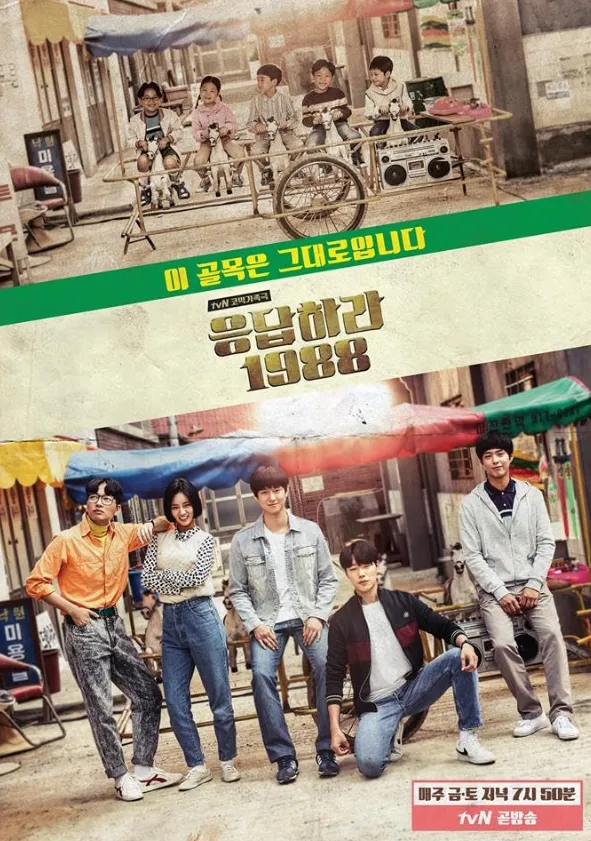
Plot Summary: Five childhood friends and their families navigate life, love, and growing up together in a close-knit neighborhood in Ssangmun-dong, Seoul, in 1988. Warm, funny, and heartbreaking all at once.
Viewing Tips:
-
Pay close attention to how characters address elders versus friends
-
The 1980s setting introduces some cultural references—embrace them as cultural learning
-
Watch for “아이고” (oh my) and other common interjections that appear constantly
-
Listen for the different speech patterns of mothers yelling versus fathers speaking formally
6. Extraordinary Attorney Woo - Best for Clear, Repetitive Speech
| Director | Yoo In-shik |
| Cast | Park Eun-bin, Kang Tae-oh, Kang Ki-young |
| Genre | Legal, Drama, Comedy |
| Runtime | 16 episodes (~70 min each) |
| Where to Watch | Netflix |
| Difficulty | ⭐⭐ Intermediate |
| Key Feature | Distinctive speech patterns + repetition + legal vocabulary |
Why Watch: The drama’s protagonist, Woo Young-woo, is an autistic lawyer who speaks with a distinctive and deliberate cadence, making every word exceptionally clear. She frequently repeats key phrases, especially her iconic self-introduction: “저는 우영우, 똑바로 읽어도 우영우, 거꾸로 읽어도 우영우” (“I’m Woo Young-woo—read forward or backward, it’s Woo Young-woo”). This repetition is a gift for learners. The series blends legal cases with everyday office interactions, giving you exposure to specialized terminology without overwhelming you. Critically acclaimed for its empathetic portrayal, it garnered an impressive 8.6 IMDb rating from over 35,000 users.
Plot Summary: A brilliant young lawyer on the autism spectrum with an IQ of 164 and an encyclopedic memory for legal statutes joins a prestigious law firm and solves cases in her uniquely creative way—while navigating prejudice, office politics, and love for the first time.
Viewing Tips:
-
Repeat Woo‘s self-introduction phrase aloud until it becomes automatic
-
Use her repetition patterns as built-in review lessons
-
Don’t worry about memorizing legal jargon—focus on how she structures sentences
-
Watch how Kang Tae-oh‘s character reacts warmly to her—his supportive lines are also great listening practice
7. Hospital Playlist - Best for Friendship & Clear Medical Vocabulary
| Director | Shin Won-ho |
| Cast | Jo Jung-suk, Jung Kyung-ho, Kim Dae-myung, Jeon Mi-do, Yoo Yeon-seok |
| Genre | Medical, Comedy, Slice of Life |
| Runtime | 2 seasons, 24 episodes (~85 min each) |
| Where to Watch | Netflix |
| Difficulty | ⭐⭐ Intermediate |
| Key Feature | Friendship banter + clear professional dialogue + band scenes |
Why Watch: This drama tells the story of five doctors who have been friends since medical school. Medical dramas introduce specialized terms but balance them with plenty of everyday conversation between doctors—you don‘t need to memorize medical jargon, but hearing it in context helps you understand how Korean handles technical vocabulary. The friendship banter is natural, fast-paced, and hilarious. The band rehearsal scenes feature songs in both Korean and English, which gives your ear a break while reinforcing cultural immersion. Shin Won-ho, the director of Reply 1988, brings the same magic of realistic, heartfelt dialogue to this critically acclaimed 8.7-rated drama.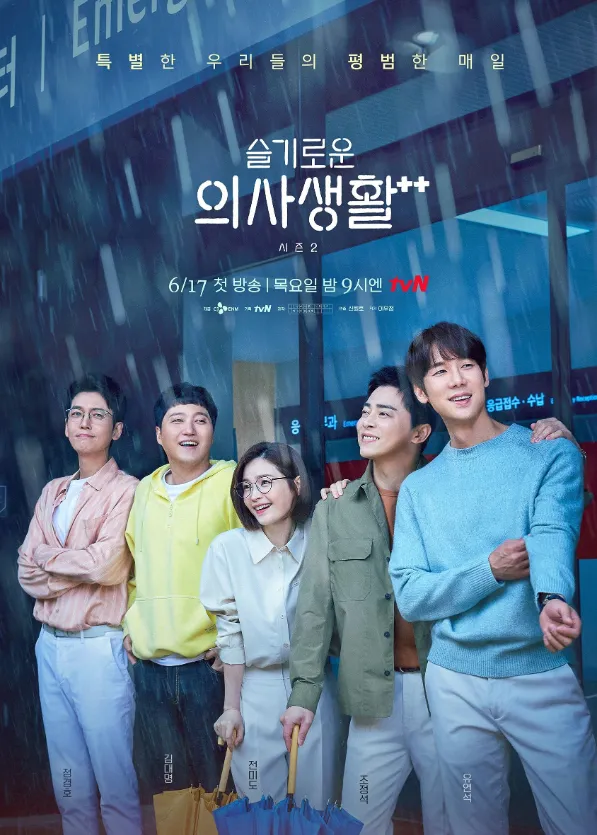
Plot Summary: Five doctors who have been inseparable friends since their grueling medical school days in 1999 now work together at the same hospital, saving lives by day and playing in a cover band by night—all while navigating the complexities of love, career, and middle-aged friendship.
Viewing Tips:
-
The band scenes are great for catching song lyrics in Korean
-
Pay attention to how the five friends address each other casually versus how they speak to patients formally
-
Many scenes take place in hospital hallways where characters speak at normal volume—good for realistic listening
-
The chemistry among the five leads is off the charts, keeping you engaged across 24 episodes
8.Business Proposal - Crisp Office Dialogues and Standard K-Drama Tropes
| Director | Park Seon-ho |
| Cast | Ahn Hyo-seop, Kim Se-jeong, Kim Min-kyu, Seol In-ah |
| Genre | Romantic Comedy, Office Drama |
| Runtime | 12 episodes (approx. 60 mins each) |
| Where to Watch | Netflix |
| Difficulty | ⭐⭐ Intermediate |
| Key Feature |
Great introduction to workplace culture.Fast-paced but repetitive language |
Why Watch: The series provides a perfect mix of formal business etiquette language (Jondetmal) used in office meetings, and casual speech used at home. The plot is formulaic and easy to follow, meaning you will not lose track of the story even if you switch off English subtitles.
Plot Summary: Business Proposal is a popular romantic comedy about Shin Ha-ri, a food researcher who goes on a blind date disguised as her wealthy best friend to scare the suitor away. Chaos ensues when she discovers the date is actually Kang Tae-moo, the CEO of her company, who promptly proposes to her to avoid his grandfather's matchmaking pressur
Viewing Tip:
-
Practice shadowing the formal greetings used when Ha-ri speaks to her boss to master corporate honorifics.
- Best for modern workplace Korean.
9. Sunny (Movie) - Best for Short-Format Learning
| Director | Kang Hyeong-cheol |
| Cast | Shim Eun-kyung, Kang So-ra, Park Jin-joo |
| Genre | Comedy, Drama, Coming-of-Age |
| Runtime | 124 minutes |
| Where to Watch | Netflix / Prime Video |
| Difficulty | ⭐ Beginner |
| Key Feature | Short runtime + flashback structure + school-age conversations |
Why Watch: For beginners who find the 16–20 episode commitment of K-dramas intimidating, Sunny offers a perfect alternative: a single, tightly-paced film that you can watch multiple times with different learning goals. With a heartwarming 7.7 IMDb rating, the movie follows a middle-aged woman who reconnects with her childhood friends from high school, triggering flashbacks to their youth. The dialogue focuses on everyday school themes: friendship, crushes, arguments, and giggles. Frequent repetitions of common phrases like “어디 가자?” (where are we going?) and “맛있게 먹자!” (let‘s eat well!) help you quickly build basic vocabulary. The flashback structure naturally repeats key vocabulary across two time periods, providing built-in reinforcement.
Plot Summary: The 2011 South Korean comedy-drama Sunny follows a middle-aged woman, Im Na-mi, who sets out to reunite her high school friend group after discovering their former leader, Ha Chun-hwa, is dying of terminal cancer. The film beautifully weaves between their present-day lives and their nostalgic, music-filled youth in the 1980s
Viewing Tips:
-
Perfect for the “watch once with English subs, once with Korean subs, once with no subs” method
-
Each flashback scene is short (3–8 minutes), making it easy to replay specific segments
-
The school vs adult sections contrast casual youth slang with more mature conversational Korean
-
Great for learning 1980s Korean cultural references and slang
10.Parasite (Movie) - Advanced Beginner Study in Socio-Economic Language Nuance
| Director | Bong Joon-ho |
| Cast | Song Kang-ho, Lee Sun-kyun, Cho Yeo-jeong, Choi Woo-shik, Park So-dam |
| Genre | Thriller, Dark Comedy, Drama |
| Runtime | 132 minutes |
| Where to Watch | Hulu |
| Difficulty | ⭐⭐ Medium-Hard |
Why Watch: While the plot becomes complex, the language is brilliant for observing the stark differences between high-class, overly polite, English-infused Korean (spoken by the Parks) and raw, street-level, colloquial Korean (spoken by the Kims).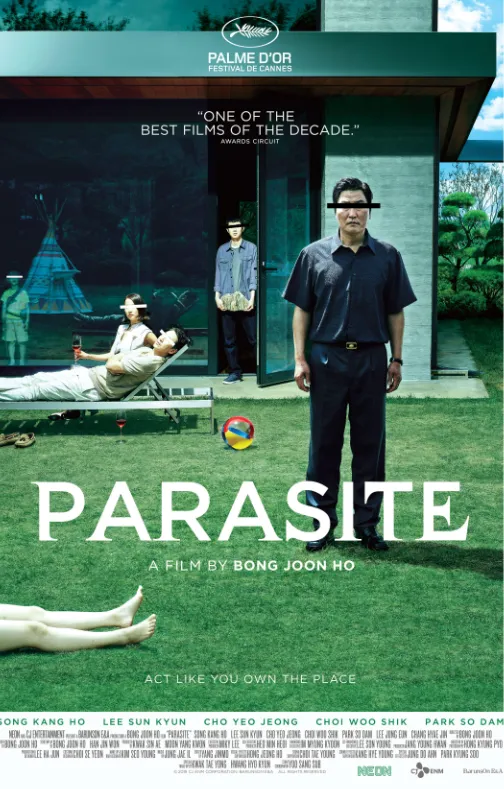
Plot Summary: Parasite (2019), directed by Bong Joon-ho, is an acclaimed South Korean black comedy thriller that explores class divisions and societal inequality. It follows the impoverished Kim family who deceitfully infiltrate the lives of the wealthy Park family by posing as highly qualified, unrelated employees.
Viewing Tip:
-
Analyze the fake tutor scenes to observe how one adopts a completely different verbal persona to command authority.
- Sharp social commentary showing distinct class-based language nuances.
📝Choose the Right K-Drama or Movie for Your Korean Level: A Quick Guide
Step 1: Ask Yourself These 3 Pain-Point Questions
Before clicking “play,” answer honestly:
| Your Pain Point | What You Need |
|---|---|
| “I know only 50 Korean words.” | A slow-paced, everyday setting with simple sentences (e.g., Hometown Cha-Cha-Cha, Yumi’s Cells). |
| “I understand words but can’t follow fast speech.” | A drama with clear pronunciation and repetitive phrases (e.g., Extraordinary Attorney Woo, What’s Wrong with Secretary Kim). |
| “I get bored if I don’t enjoy the story.” | A genre you already love (rom-com, thriller, family slice-of-life). Don’t force yourself to watch a genre you hate just because it’s “good for learning.” |
🎯 Bottom line: Your first learning drama should be easy to understand AND fun to watch. If it’s missing either quality, you’ll likely give up.
Step 2: Match Your Level to a Drama Type
Use this simple level map – no need for a placement test.
| Your Level | Best Drama Features | Example Title |
|---|---|---|
| Absolute Beginner (knows Hangul, basic greetings) | – Everyday situations (eating, shopping, dating) – Polite speech (요 endings) – Little to no slang or technical jargon |
Hometown Cha-Cha-Cha Yumi‘s Cells What’s Wrong with Secretary Kim |
| Beginner with Some Confidence (can say simple sentences) | – Mix of polite and casual speech – Clear plot lines – Some repetition of key phrases |
Weightlifting Fairy Kim Bok-joo Secret Garden Squid Game (instructions are simple) |
| Lower Intermediate (can follow slow conversations) | – Slice of life or family dramas – Multi-generational talk – Less action, more dialogue |
Reply 1988 Hospital Playlist Because This Is My First Life |
⚠️ Avoid these as a beginner: historical dramas (archaic words), legal thrillers (jargon), or shows with heavy regional dialects (unless that’s your goal).
Step 3: Choose by Your Learning Goal – Not Just by Popularity
Different dramas teach different types of Korean. Pick based on what you actually want to say in real life.
| I want to learn… | Best drama type | Example |
|---|---|---|
| Everyday conversation (greetings, ordering food, small talk) | Slice of life, rom-com | Hometown Cha-Cha-Cha, Reply 1988 |
| Office / business Korean | Workplace drama | What’s Wrong with Secretary Kim, Itaewon Class |
| Slang and casual talk with friends | Youth / college drama | Weightlifting Fairy Kim Bok-joo, Our Beloved Summer |
| Polite, formal Korean | Romance or family drama | Crash Landing on You, Yumi’s Cells |
| Clear, slow, repetitive sentences | Legal or medical with a unique lead | Extraordinary Attorney Woo |
Step 4: Decide Between a Drama (Series) or a Movie
| Format | Best for… | Why |
|---|---|---|
| Drama (16+ episodes) | Building long-term listening stamina, repeated exposure to same characters’ speech patterns | You hear the same vocabulary and speech styles across 16+ hours – great for retention. |
| Movie (90–120 min) | Short learning sprints, repeating one story multiple times | Perfect for the “watch 3 times” method (English subs → Korean subs → no subs). |
💡 Beginner tip: Start with a movie if you’re unsure about committing to 16 hours. Sunny (2011) is a perfect first choice.
Step 5: Use the “One-Minute Test” Before You Commit
Don’t guess – test. Open any recommended drama, skip to a random scene in the middle of episode 1, and listen for 60 seconds.
Ask yourself:
-
Can I hear individual words, or is it all a blur?
-
Do the characters speak mostly clearly (not mumbling or shouting)?
-
Can I identify at least 2–3 words I’ve learned before?
✅ If yes → good choice.
❌ If no → choose an easier drama or a movie.
📌Quick Checklist: Your Ideal First Korean Learning Drama
Use this checklist before you press “play”:
-
Setting: Everyday life (home, school, office, café – not courtrooms or battlefields)
-
Speech speed: Slow to medium (not rapid-fire)
-
Vocabulary: Mostly practical (food, feelings, daily actions)
-
Subtitle support: Has Korean subtitles available (for rewatching)
-
Enjoyment factor: You genuinely want to know what happens next
‼️Recommended Learning Path for Beginners
| Level | Recommended Titles |
|---|---|
| Complete Beginner | Extraordinary Attorney Woo, Hometown Cha-Cha-Cha, Little Forest |
| Beginner | Crash Landing on You, Business Proposal |
| Beginner–Intermediate | Hospital Playlist, Because This Is My First Life |
| Intermediate | Our Beloved Summer, Reply 1988 |
| Advanced | Medical, Legal, Historical, and Crime Dramas |
⚡Quick Tips & Advice for Learning Korean with K-Dramas (For Beginners)
Watching Korean dramas and movies can be one of the most enjoyable ways to improve your Korean, but simply turning on subtitles isn't enough. Here are some beginner-friendly strategies to help you learn faster while still enjoying the story.
For Beginners
⏩Start with the right subtitle strategy. Watch the story once with English subtitles if needed, then rewatch a short scene (2–6 minutes) with Korean subtitles to connect sound to spelling. For absolute beginners, watching the same episode twice works well—first time with English subtitles to understand the plot, second time with Korean subtitles to focus on the language.
⏩Don‘t binge passively. Passive watching with English subtitles won’t make you fluent. Your brain takes the easy route and ignores the Korean audio entirely. Real progress comes from engaging actively: rewinding, pausing, taking notes, and sometimes looking up words that keep popping up.
⏩Pick 3–5 useful expressions per episode. Focus on greetings, apologies, requests, and common sentence patterns like “할게요” (I‘ll do it) or “됐어요?” (Is it done?). Listen for them again later in the series.
For Intermediate Learners
⏩Use Korean subtitles from episode one. Even as an intermediate learner, keep Korean subtitles on—they serve as a visual support for parsing fast speech and noticing word boundaries.
⏩Shadow and mimic. Repeat short phrases aloud immediately after hearing them. Shadowing improves pronunciation, intonation, and speaking fluency. Focus on the tone and rhythm of the lines, not just the words.
⏩Try dictation exercises. Pick a favorite 30-second scene and write down everything you hear. Play it back until you‘ve captured every word. Then check against Korean subtitles and correct your mistakes.
For All Levels
⏩Keep a vocabulary notebook (or app). Jot down new words by scene or theme—food vocabulary from meal scenes, office terms from workplace interactions, romantic expressions from love scenes. Review regularly and try making your own sentences.
⏩Pay attention to speech levels. Korean has multiple politeness levels. Notice how characters switch between:
-
Formal (합니다/십시오) → boss to employee, TV news
-
Polite (요 endings) → default polite speech among adults
-
Casual (반말) → close friends, siblings, angry outbursts
⏩The “watch three times” method:
-
First watch: English subtitles. Understand the plot, characters, and emotional beats.
-
Second watch: Korean subtitles. Pause. Look up words. Notice sentence patterns.
-
Third watch: No subtitles (or Korean audio with Korean subs). Test your comprehension.
✅Quick Formula for Faster Progress
Watch → Repeat → Write → Speak
-
Watch a scene.
-
Repeat key sentences aloud.
-
Write down useful expressions.
-
Use them in your own practice conversations.
Even 20–30 minutes per day can significantly improve your Korean listening, vocabulary, pronunciation, and confidence over time.
⚠️Common Mistakes to Avoid
❌ Trying to learn every word in an episode
❌ Choosing historical dramas as your first Korean-learning content
❌ Watching only with English subtitles forever
❌ Binge-watching without reviewing vocabulary
❌ Giving up because native speakers seem too fast
Instead:
✅ Focus on understanding the overall message.
✅ Learn useful phrases, not isolated words.
✅ Rewatch scenes rather than constantly searching for new content.
✅ Prioritize consistency over study time.
✂️FAQs: Troubleshooting Your K-Drama Language Learning Journey
New learners often hit the same walls. Here are the most frequent struggles – and simple, action‑based fixes.
| Question | Answer |
|---|---|
| 1. Are K-dramas a good way to learn Korean for complete beginners? | Yes. K-dramas expose learners to natural pronunciation, common expressions, and everyday conversations. Beginners should start with simple, dialogue-driven series rather than complex historical or crime dramas. |
| 2. Should I watch with English subtitles or Korean subtitles? | Beginners can start with English subtitles to understand the story. As listening skills improve, switch to Korean subtitles to strengthen reading and vocabulary recognition. |
| 3. What genres are best for learning practical Korean? | Romance, slice-of-life, family dramas, and workplace comedies usually contain the most useful everyday vocabulary and conversational phrases. |
| 4. Are Korean movies or K-dramas better for language learning? | K-dramas are generally better for beginners because recurring characters and repeated vocabulary provide more language exposure over time. Movies are useful for shorter learning sessions. |
| 5. Can I learn Korean just by watching dramas? | Watching alone is helpful for listening practice, but combining it with note-taking, vocabulary review, and speaking exercises will produce much faster results. |
| 6. Which K-dramas should beginners avoid? | Historical dramas (Sageuk), legal thrillers, crime series, and medical dramas often contain advanced vocabulary, formal speech, and cultural references that may be difficult for beginners. |
| 7. How much Korean should I understand before watching without subtitles? | There is no fixed level. Many learners begin reducing subtitle usage after mastering basic vocabulary and common sentence patterns. Gradual transition works best. |
| 8. How many hours should I watch each week to improve my Korean? | Consistency matters more than volume. Watching 20–30 minutes daily with active learning techniques is often more effective than occasional binge-watching sessions. |
| 9. What should I do when native speakers talk too fast? | Rewatch scenes, slow playback speed if available, and focus on understanding key words rather than every sentence. Listening comprehension improves naturally with repeated exposure. |
| 10. Which streaming platforms are best for learning Korean? | Platforms such as Netflix, Viki, Kocowa+, and OnDemandKorea offer original Korean audio and subtitle options, making them excellent choices for language learners. |